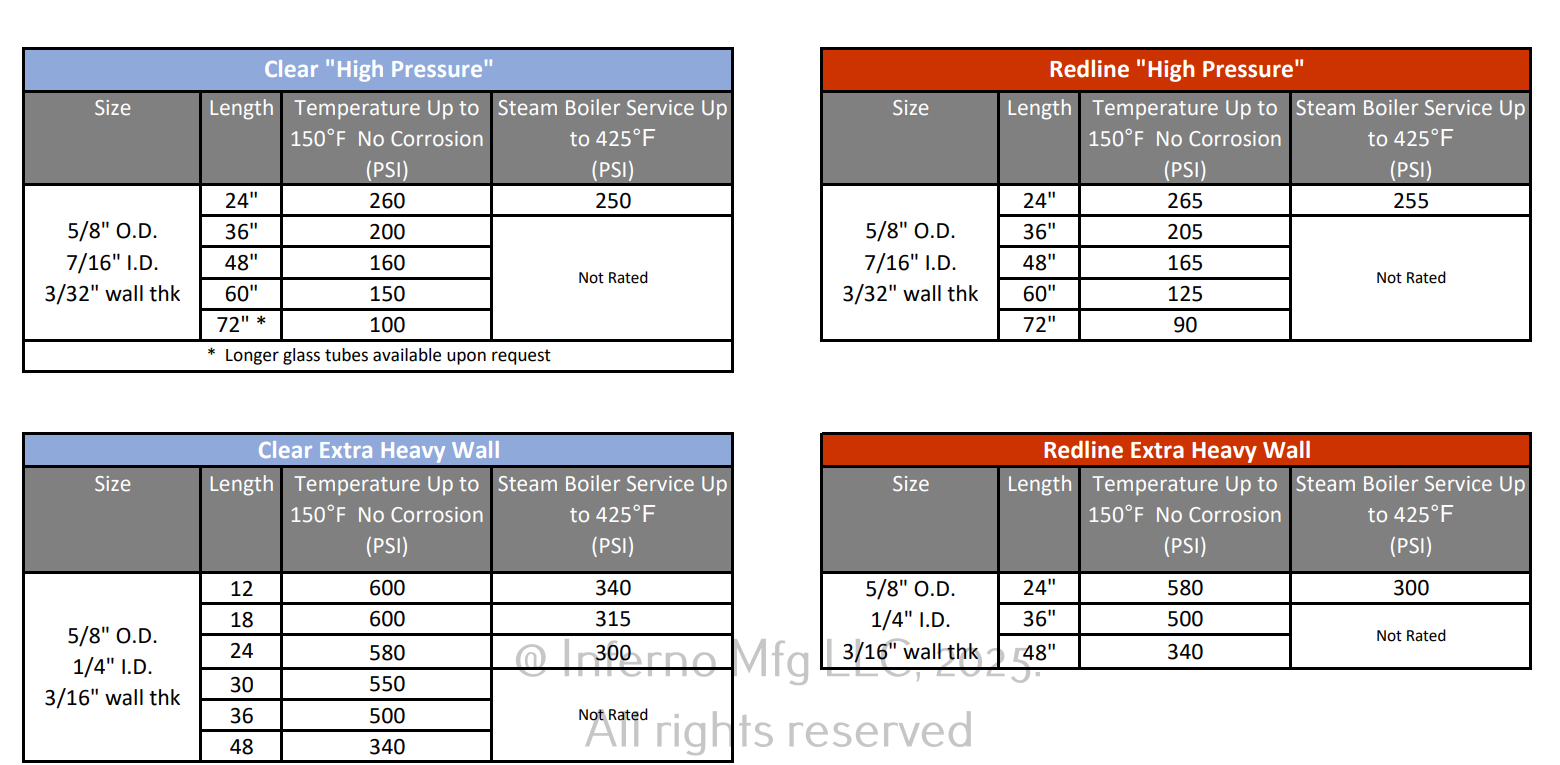
Glass tubes are suitable for liquid level reading in a variety of applications, from bulk storage tanks to low pressure oilfield separators. Tubes are made of borosilicate glass which is chemically compatible with oils, fuels, & a variety of chemicals. However lass is attacked by hot water/steam through a dissolving process with certain minerals leached away by water as temperature increases. See limitations in Pressure Rating Tables. The values shown for steam service at 425°F are not conservative. Glass tubes used in steam service above the boiling point will require periodic and possibly frequent replacement, depending on service temperature, because of the loss of wall thickness caused by hot water “erosion”
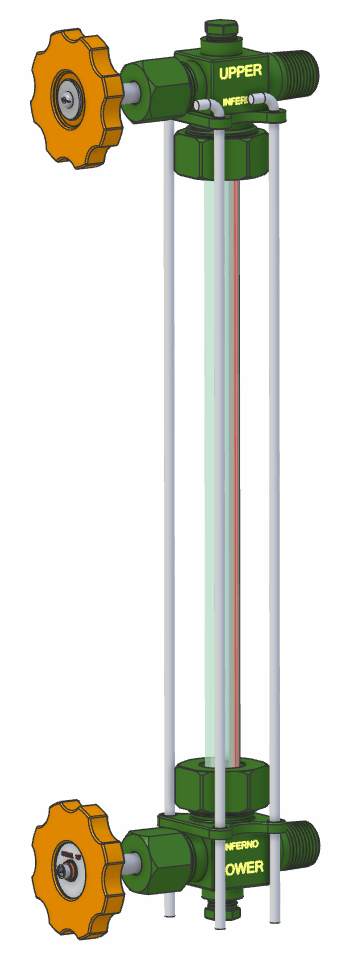
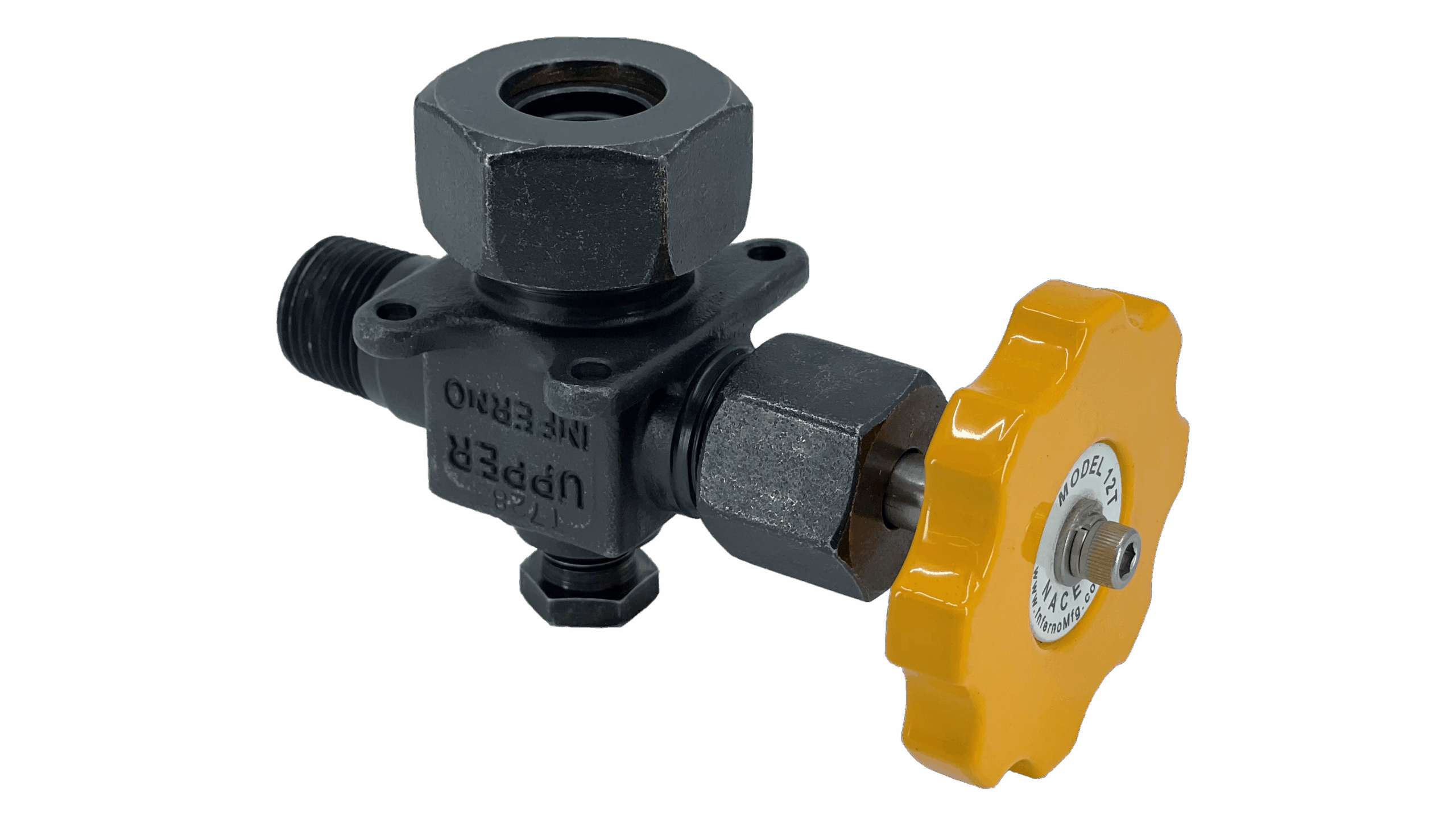
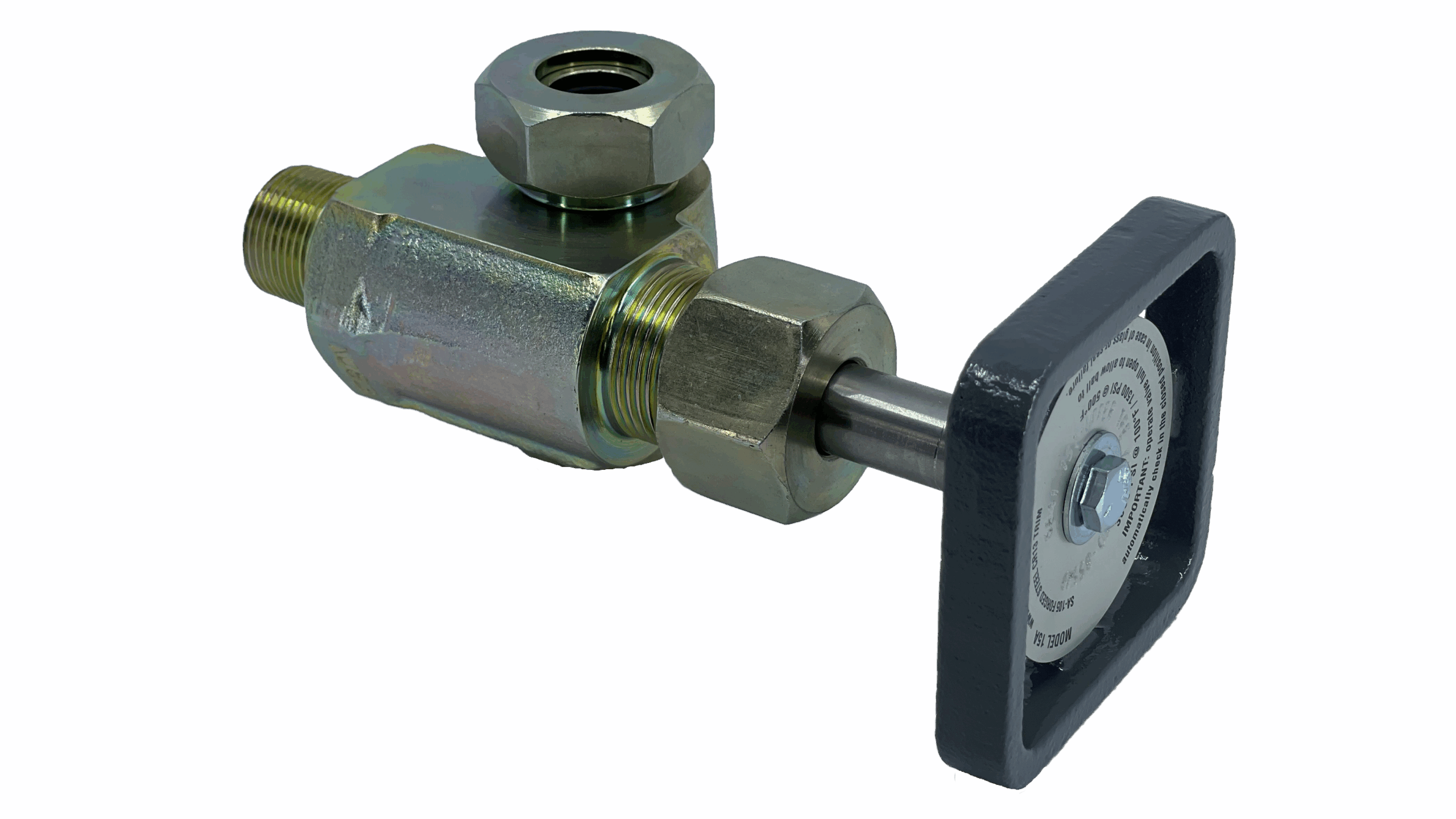
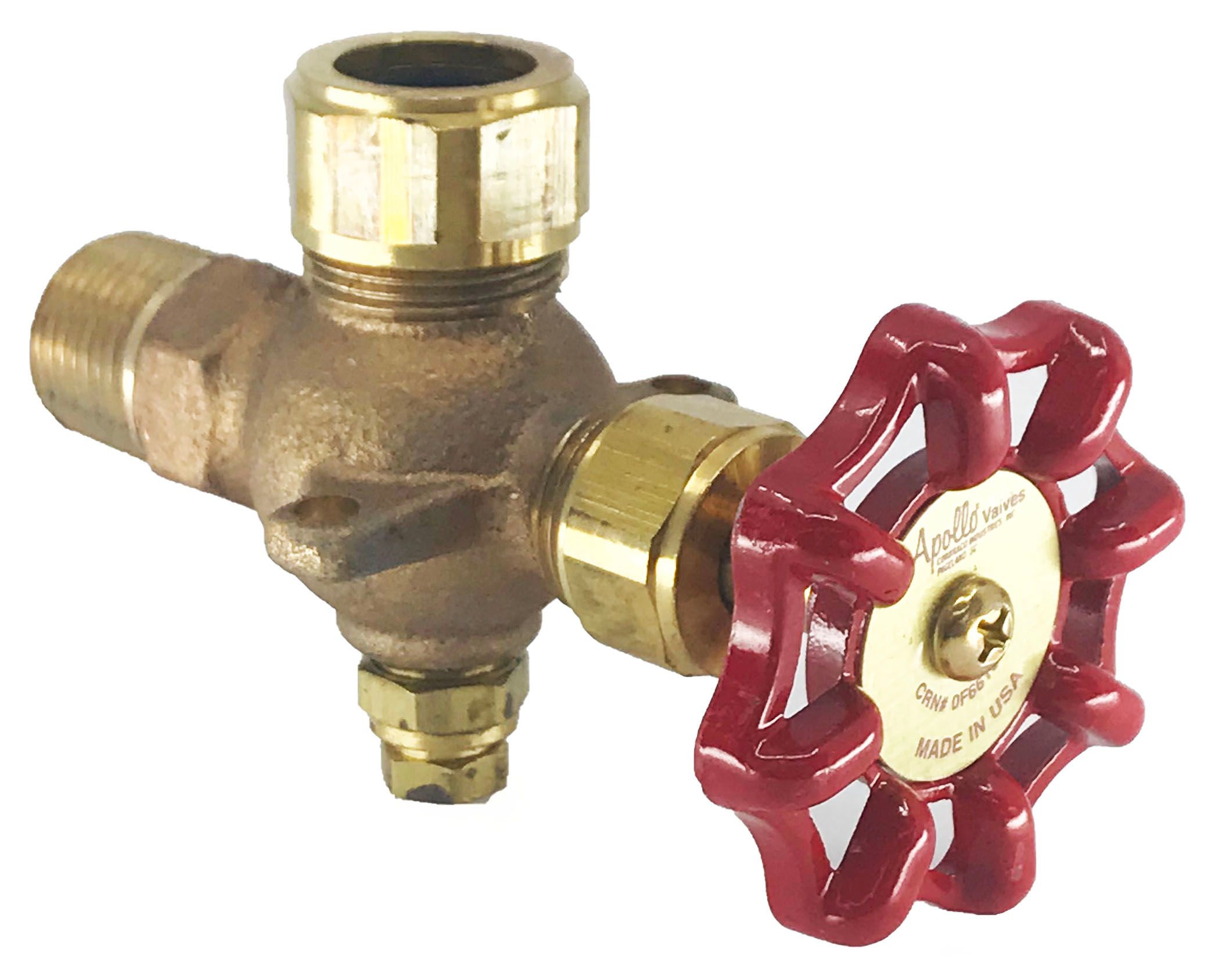
Glass tube diameter must be compatible with the stuffing box diameter of the gage valve, aka gage cock. Most tubular glass type gage valves with 1/2”M-NPT vessel connection are sized with a 5/8” diameter stuffing box. We stock 5/8” glass diameter tubes for this reason. Be aware that many other brands of tubular gage valves are also available with 3/4” diameter tubular glass, especially when the connection is 3/4” M-NPT instead of 1/2”. Inferno tubular gage valves are all fitted with 5/8” diameter stuffing box, so we use 5/8” diameter as our standard tubular glass size
Mechanical strength...In a stuffing box the fluid acts on the ends of the glass tube which produces a buckling force. Buckling in a "slender column” proceeds more readily as the column length increases. Longer lengths are more limber. Glass is a brittle material and is readily susceptible to failure in bending, where a tensile force exists on one side of the “bow". Glass manufacturers provide pressure ratings accordingly. The ratings are shown at 150°F for general purpose and at 425°F for steam. We are allowed to interpolate a pressure rating between successive lengths in the tables; but not between the 150°F and the 425°F columns. For operating temperatures above 150°F use the 425°F column of the table. Note that the glass manufacturer’s ratings at 425°F are limited to shorter lengths. The ratings are historical, and we do not take exceptions
A heavy wall version of glass tube is available with higher ratings to reflect the tubes’ greater stiffness in bending. Heavy wall glass is available only up to 48” long
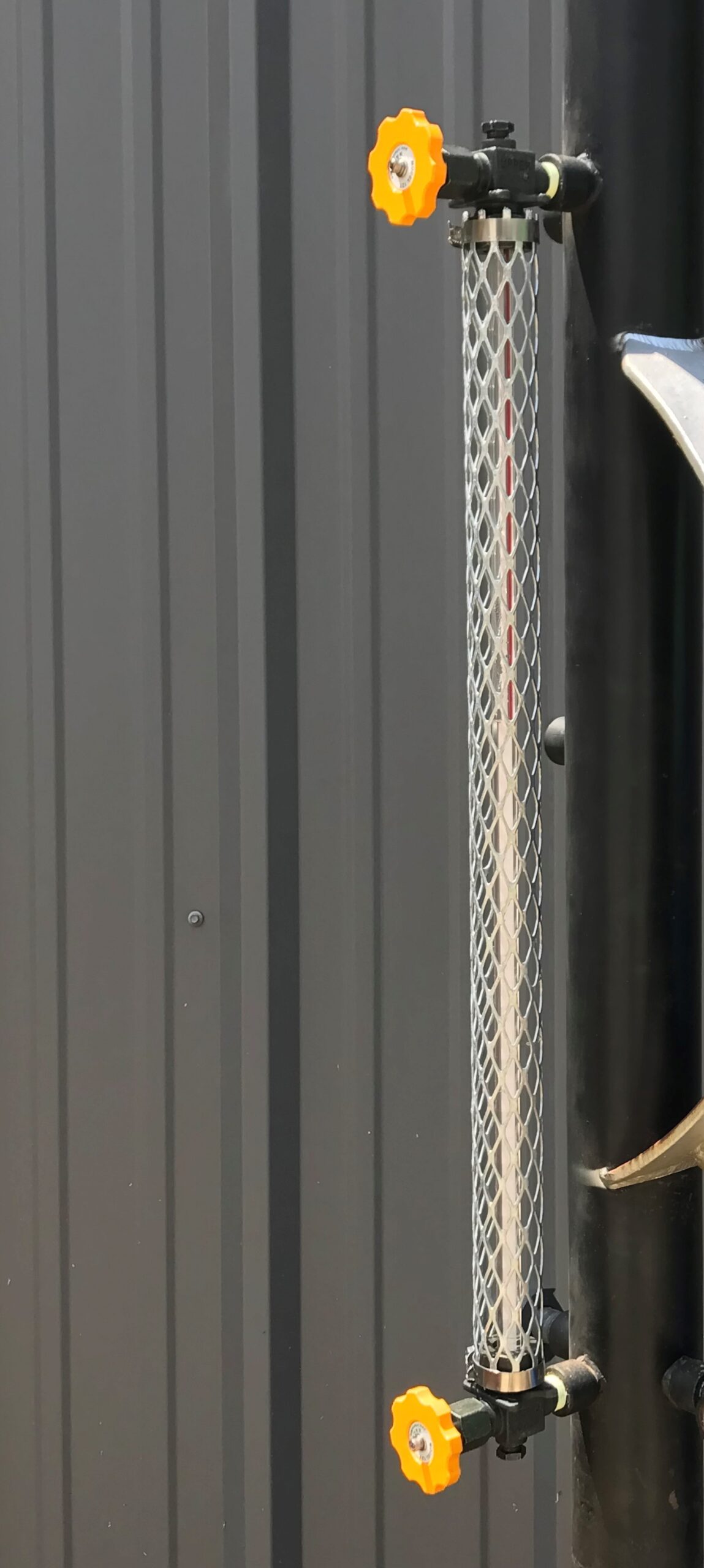
Glass can be protected from external threats such as animals and slanted hail- See “Hail Guard” under accessories
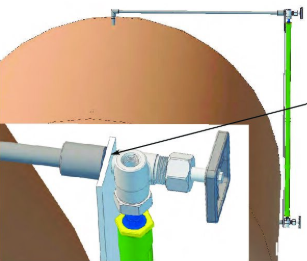
Be aware that the same fluid pressure that acts on the ends of the glass tube also creates an opposite force in the valve itself, causing the the upper and lower gage valves to spread apart from each other as pressure is increased. If the vessel nozzles are not held in a rigid position by means of the vessel structure and if they are instead allowed to flex because of long attachment piping then as fluid pressure increases they will spread away from each other. This action can allow one or both ends of the glass tube to retract and separate from the stuffingbox of the gage valve, causing instant leakage. For installations with flexible piping attachments we recommend using an “Anti-Spreading”bar listed under Accessories
In short lengths it is the hoop strength that governs the pressure capability of the glass tube, not the buckling forces. In order to take advantage of the inherent strength of the glass tube we offer Model TE armored tubular type level gages. The armor shroud not only protects the bare glass from external damage; it also provides a structure for adding anti-buckling restraints, thereby increasing pressure capability where required - see next tab
Note: All glass used in steam service (tubular & flat glass) is subject to corrosion and shortened life depending on service temperature. Operating at 425°F steam results in rapid loss of wall thickness. Consider using flat glass type level gage for steam above 50 WSP